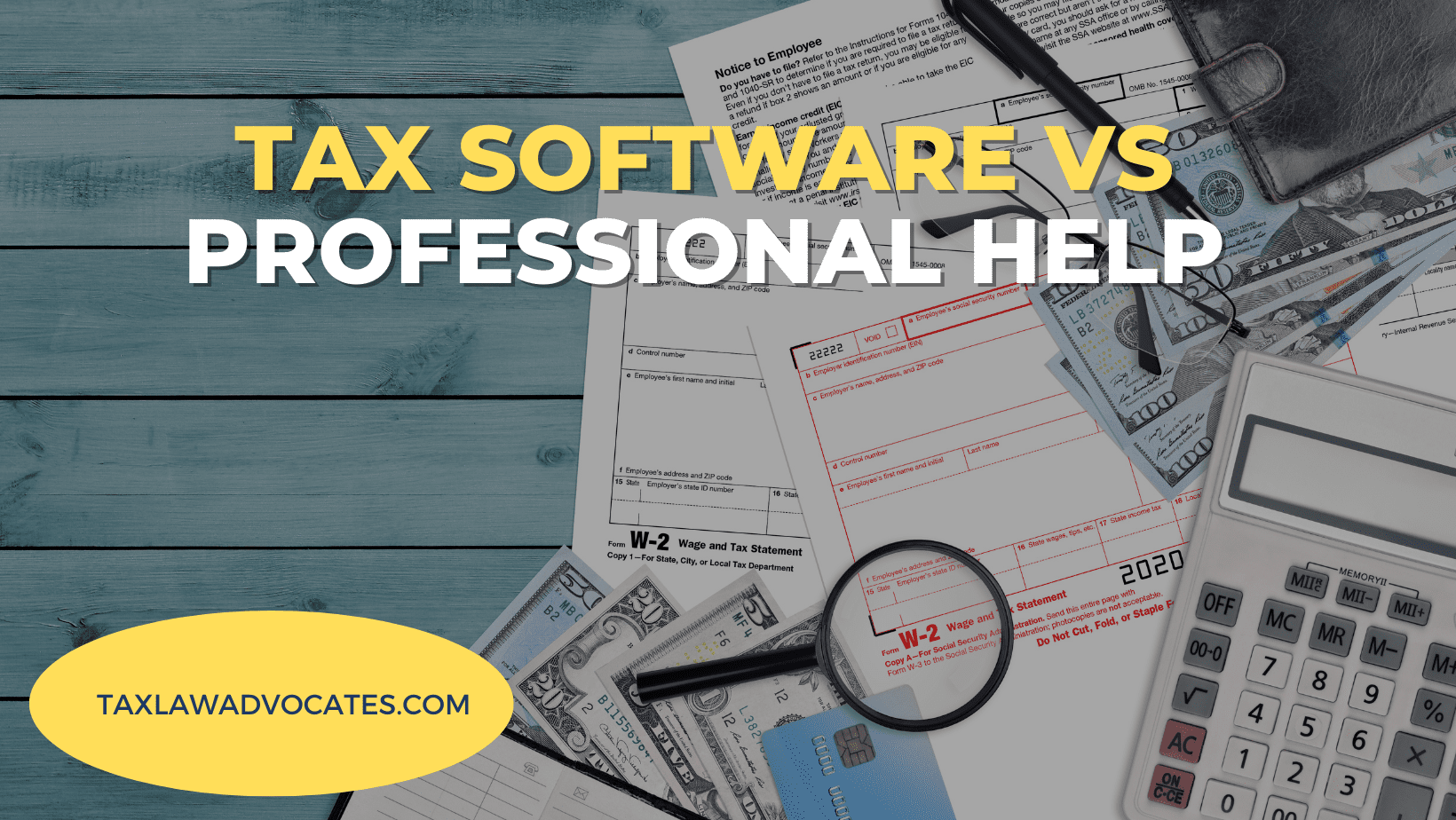
As tax season approaches, taxpayers are faced with the age-old question: Should they file their taxes using DIY tax software or hire a professional tax preparer?
Each has its pros and cons, and the best choice depends on your situation, tax complexity and personal preference. In this blog, we’ll go over the benefits and drawbacks of both to help you make an informed decision.
At Tax Law Advocates we’re here to guide and support you with all your tax needs.
Tax Filing Basics
Before we get started, let’s cover some tax filing basics. The deadline to file taxes is April 15th every year, but if that falls on a weekend or holiday the deadline is the next business day.
The IRS offers a 6-month extension if you request it in writing using Form 4868: Application for Automatic Extension of Time To File U.S. Individual Income Tax Return.
The IRS recommends filing electronically and opting for direct deposit to speed up the process and reduce errors. Taxpayers can file using tax software—some of which use artificial intelligence (AI)—or hire a professional preparer.
Tax Software
Many taxpayers choose tax software for its convenience and cost. Here are the key factors to consider:
Price
Tax software is cheaper than hiring a CPA or professional tax preparer. Prices vary depending on the software and your tax situation. Companies like H&R Block and TurboTax offer packages from $25 to $120. Simple returns may even qualify for free filing.
Speed
Filing at home allows you to do your taxes at your own pace. For simple returns it may take less than an hour. Once filed your return is sent directly to the IRS and your state and you get a confirmation email. Professional preparers may take several days to weeks to process and file your return.
Simplicity
Good tax preparation software walks you through the process with user friendly interfaces and step by step instructions. Online support is often available for extra help. This is ideal for those with straightforward tax situations, single income sources and a few deductions.
DIY Software Eligibility
Some taxpayers may qualify to file their federal tax returns using the IRS’s Direct File program. This is available in select states including Arizona, California, Florida, Massachusetts, Nevada, New Hampshire, New York, South Dakota, Tennessee, Texas, Washington State and Wyoming and requires meeting specific eligibility criteria.
Hiring a Professional
For those with more complex tax situations hiring a professional tax preparer can be beneficial. Here are the advantages:
Expertise
Professional tax preparers including CPAs and enrolled agents have extensive knowledge of tax laws and regulations. They can offer valuable advice on tax planning and strategies to minimize your tax liability.
This is especially helpful for those with multiple income streams, business income or complex deductions.
Better Software
Professionals use sophisticated accounting software that can handle more complex tax scenarios. These programs can quickly scan and organize information reducing the chance of errors.
Time Savings
Tax professionals can save you time especially if your tax situation is complicated. They are familiar with the system and can handle tasks that would take you hours of research.
Relationship Building
Developing a relationship with a tax professional can provide long term benefits. They will understand your financial situation and can offer tailored advice to help you achieve your financial goals.
Cost
The cost of hiring a professional varies. On average a federal tax return with a Schedule A and a state income tax return costs about $323. While this is more than most tax software the potential tax savings and peace of mind may be worth it.
What’s the difference between a CPA and a Tax Professional or Preparer?
A certified public accountant (CPA) is a certified tax professional who may work in various fields including private accounting or auditing. Tax professionals or preparers are not CPAs and do not have certifications but may work for tax preparation companies or the IRS.
Is it worth it to pay for a tax professional?
The decision to hire a tax professional depends on the complexity of your tax situation. If you have simple taxes such as a single income source and few deductions, filing yourself using tax software may be the most cost effective option.
But if you have complex taxes that require special forms and calculations, hiring a professional can ensure accuracy and potentially save you money in the long run.
Where can taxpayers find important tax filing information?
The IRS has educational information, tips and online access to individual accounts on their website. Additional resources include Investopedia’s tax page which has a ton of information on tax filing.
Conclusion
The choice between tax software and professional help is yours. If you have simple taxes you may save money with tax software and if you have complex finances you’ll benefit from the expertise and personalized advice of a professional.
At Tax Law Advocates we understand tax preparation and are here to help you make the best decision for you.
Whether you go the DIY route or seek professional help we are here to support and guide you. For expert tax help call 855-612-7777 or get in touch with us. Let us help you navigate the tax system and get the most back.